Endovascular Aortic Aneurysm Repair Surgery in India: Cost, Top Doctors & Leading Hospitals
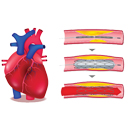
Endovascular aortic aneurysm repair is a minimally invasive procedure that is used to treat an abdominal aortic aneurysm by reinforcing the weakened area of the aorta with a stent graft. Compared with open surgery, EVAR also reduces operative risk, hospital stay, pain, and recovery time, making it a preferred treatment option worldwide. India has emerged as a leading country for EVAR treatment due to its combination of internationally trained vascular surgeons, advanced catheterisation labs, and far more affordable treatment costs when compared with the US, UK, and Middle East. Many African patients travel to India because they can access world-class medical expertise, shorter waiting times, and comprehensive cardiac care here at prices that are often a fraction of what is available in their home countries. CureIndia’s expert surgeons perform EVAR procedures to help patients effectively manage aneurysm-related conditions and return to their daily, healthy, and active lives.
What is an Abdominal Aortic Aneurysm (AAA)?
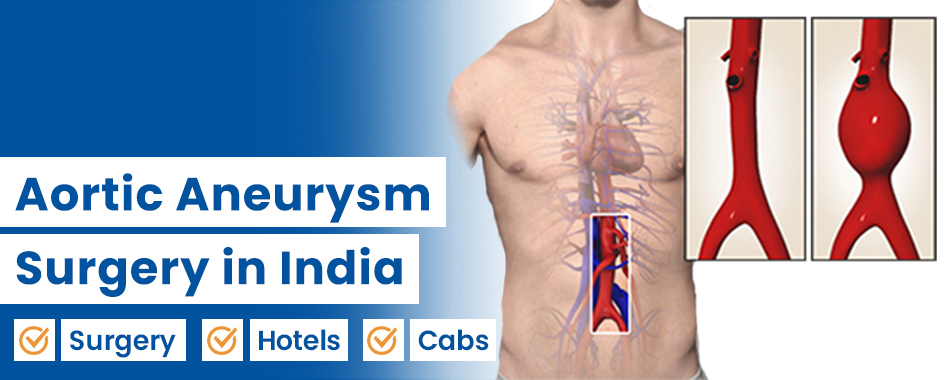
The aorta is the largest artery in our body. It begins at the base of our heart and extends through the chest, and it ends in the abdomen. The portion that connects with our belly is called the abdominal aorta. This aorta carries oxygen-rich blood from the heart to the abdomen, pelvis, and legs.
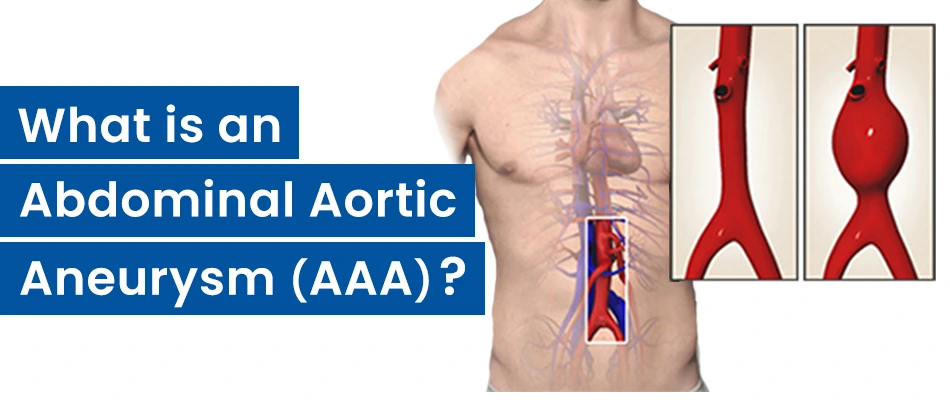
An aneurysm is the medical term used for the swelling of the aorta. The walls of the aorta can swell or bulge like a balloon if it becomes weak. The condition is known as abdominal aortic aneurysm when it occurs in the abdominal part of the aorta.
In a rare case, an aneurysm of less than 5.5 cm in diameter bursts. The risk is less than 1 in 100 per year. However, an aneurysm of 5.5 cm and larger is more likely to rupture. It is usually at this size that surgery is suggested. Each individual’s risk from their AAA and surgery will be different.
Abdominal Aortic Aneurysm (AAA) does not always cause a problem. However, increasing growth of the aorta in the abdomen can rupture and cause severe bleeding. This bleeding can cause shock or death in severe cases.
What are the Symptoms of Abdominal Aortic Aneurysm?
Abdominal aortic aneurysm (AAA) grows slowly. Therefore, often AAA does not show any symptoms. Hence, generally, the disease is left undetected. Some aneurysms never grow and remain the same without rupturing. However, other aneurysms grow, and rupture risks life. Here are the symptoms of abdominal aortic aneurysms that one should consider.
- Deep and consistent pain in the belly area or one side of the belly
- Constant back pain
- A pulse near the belly button
Who Requires Endovascular Aneurysm Repair?
People who have cardiovascular issues are at risk of developing abdominal aortic aneurysm. Thus, they require AAA EVAR repair. Here are some conditions that develop the risk of AAA.
- Coronary Artery Disease
- Peripheral Artery Disease
- High blood pressure
- High cholesterol
- Obesity or overweight
- Smoking
- Due to ageing
- Suffering from certain infection
- Certain congenital conditions
Is there any Alternative to EVAR Surgery?
Currently, no alternatives or medications are available for EVAR surgery. No medicines can strengthen the wall of the aorta.
An open surgery can repair an aneurysm. It involves a large cut in the abdomen (from top to bottom). Then they will replace the weakened aorta with a tube. However, open surgery is not suitable in all cases. Hence, it is necessary to talk with a specialist. The specialist will suggest a better way of abdominal aortic aneurysm repair.
What are the Advantages of Endovascular Aortic Aneurysm Repair?
The abdominal aortic aneurysm endovascular surgery is minimally invasive. Hence, the procedure is more advantageous than an open surgery. However, the specialist can only suggest a suitable surgery procedure. The advantage include:
- Quick recovery after surgery
- Less blood loss
- Quick return to regular activities
- Less discomfort
- Reduced risk of having a heart attack during the EVAR procedure.
Best Endovascular Aortic Aneurysm Doctors in India
Endovascular aneurysm repair is a minimally invasive procedure that is used to treat aortic aneurysms in the aorta that can rupture if left untreated. EVAR involves placing a stent graft inside the aorta to reinforce the weakened area with quicker recovery and fewer complications compared to an open surgery. India has a strong network of vascular and endovascular specialists who are skilled in performing this advanced procedure using the latest imaging and interventional technologies. Some of the best doctors for endovascular aortic aneurysm repair in India include:
1. Dr. Naresh Trehan
Dr. Naresh Trehan is a top endovascular aortic aneurysm surgeon in India with more than 50 years of experience as a cardiac specialist surgeon. As the founder and chairman of Medanta - The Medicity, Gurgaon, he has led one of India’s largest multi‑specialty hospitals and helped build advanced cardiac and vascular care infrastructure. His areas of interest include open heart surgery, aortic and aneurysm surgery, and minimally invasive cardiac and vascular procedures.
.webp)
2. Dr. Anil Bhan
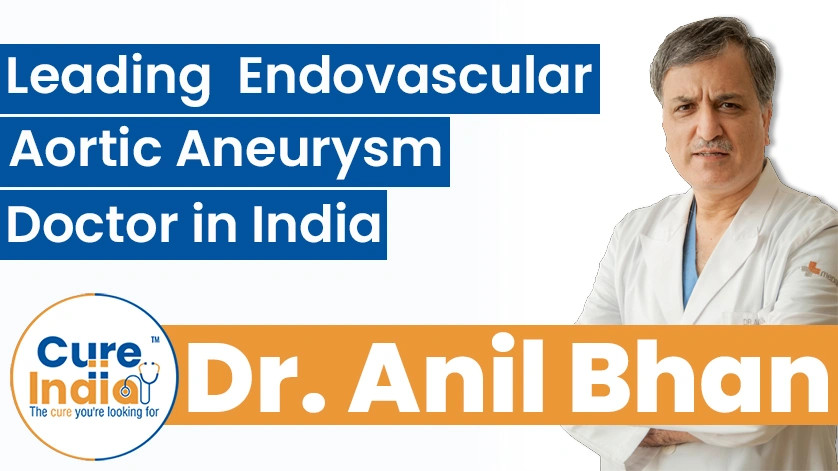
Dr. Anil Bhan is a leading endovascular aortic aneurysm doctor in India, holding an M.Ch in Cardio‑Thoracic & Vascular Surgery, and has over thirty-seven years of surgical experience specialising in cardiac and aortic vascular diseases. He is credited with extensive expertise in aortic aneurysm repair, complex aortic surgeries, valve repair, and more.
3. Dr. Ajay Kaul
Dr. Ajay Kaul has around 38 years of experience in performing cardiovascular and vascular surgery, with specialisations in endovascular aortic aneurysm surgery, complex congenital cardiac cases, and minimally invasive cardiac procedures. His breadth of surgical work covers both adult and pediatric cardiac interventions with hands‑on experience in aortic pathology.
4. Dr. Z.S. Meharwal
Dr. Z.S. Meharwal is a senior cardiac and vascular surgeon in India with more than 30 years of experience and specialisation in endovascular aortic aneurysm surgery. He has performed thousands of cardiac surgeries till date, which include aortic‑related procedures and is known for managing complex vascular and cardiovascular conditions with successful outcomes.
.webp)
What is the Cost of Endovascular Aortic Aneurysm Repair Surgery in India?
The cost for Endovascular Aortic Aneurysm repair in India is around $10,000 depending on the hospital, implant used, and complexity. The final pricing varies based on the surgeon’s expertise, hospital facilities, duration of hospital stay, and need for additional care such as ICU, imaging or follow‑up interventions.
The average cost of endovascular aortic aneurysm repair surgery in India along with the total stay is mentioned below:
| Treatment Name |
Cost in India |
Stay in India |
| Endovascular Aortic Aneurysm Repair Surgery in India |
$9,000 - $10,000 |
10-15 Days |
Who are the Ideal Candidates for Endovascular Aortic Aneurysm Repair?
If you have an abdominal aortic aneurysm, you may have candidacy for Endovascular Repair. However, a specialist can suggest the procedure after various tests & diagnosis. You may hold candidacy for EVAR if you have:
- A rapidly growing smaller or larger aneurysm
- Not qualified for open surgery or larger incision
- Healthy vessel tissue near the aneurysm
Tests and Examinations Before EVAR
Here are the following tests and examinations done before doing the EVAR procedure.
- Blood test: To detect anemia or infections
- Electrocardiography: This test will check the size of the aneurysm
- Electrocardiogram (ECG): Check the heart rhythm
- Angiography: Provides details of aneurysm
- CT Scan: Creates a detailed image of the aneurysm
How does Endovascular Aortic Aneurysm Repair (EVAR) work?
After an expert finds you a suitable candidate for endovascular aortic aneurysm repair, you can expect the below procedures during surgery.
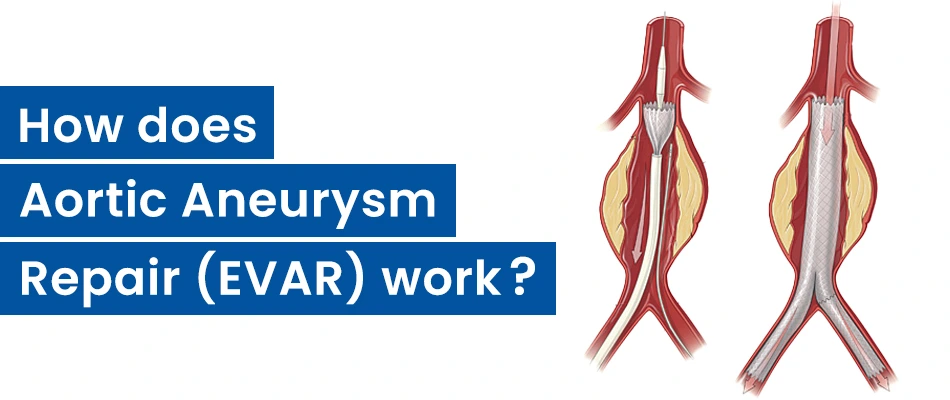
- At first, anesthesia given to you helps you fall asleep or relax. It will help you relax during the procedure without any discomfort or pain.
- The expert then uses arteries near the groin region called femoral arteries. It will help with accessing abdominal aortic aneurysms.
- Next, the expert will insert a catheter that contains a low profile and expendable stent graft. The catheter is then guided through the arteries to reach the aneurysm.
- After reaching the aorta, the stent opens and fastens the place. So, the blood flows through it. It also prevents aneurysms from bursting.
- Completing the procedure, the specialist will close the incision using a small bandage.
How is Recovery After an EVAR Procedure?
Patients who underwent an EVAR procedure are required to stay one to three days in the hospital. After EVAR, eating and drinking are abstained until the patient is awake from the sedation. When patients can sit or stand, they can leave for home. The expert doctor will prescribe some medications along with painkillers.
In most cases, the patient fully recovers after the EVAR procedure within two weeks. They also can return to their work. However, older people may need more time to recover. For older people, it may take a month or more to fully recover after endovascular repair surgery. It is suggested to improve activities gradually through the recovery period.
What is Fenestrated Endovascular Aneurysm Repair (FEVAR)?
Fenestrated endovascular aneurysm repair (FEVAR) is a specialized technique that repairs complex aneurysms. The procedure supports both the aorta and arteries that split off to the kidneys and heart. The abdominal aorta has many branches that carry blood to the organs in our belly. FEVAR is required when an aneurysm happens in one of those branches.
Grafts with small openings are being utilized in FEVAR (Fenestrated Endovascular Aneurysm Repair). FDA has approved the FEVAR technique. The special device for FEVAR fits into the tree branches like the structure of the aorta. Depending on the location of the aneurysm, the specialist may suggest FEVAR.
What is the Difference Between TEVAR and EVAR?
The full form of TEVAR is Thoracic endovascular aneurysm repair. TEVAR fits to treat the aneurysm situated in the thorax or chest. On the other hand, EVAR treats the aneurysm near the belly. TEVAR is specially fit for treating the descending aorta. The descending aorta is the part of the aorta that moves to the abdomen through your chest.
LET'S PLAN YOUR
TREATMENT IN INDIA
Endovascular Aneurysm Repair Surgery in India FAQs
EVAR is the short form of Endovascular Aortic Aneurysm Repair (EVAR). It is a minimally invasive surgery to treat andominal aortic aneurysm.
Endovascular Aneurysm Repair (EVAR) is a minimally invasive procedure to treat Abdominal Aortic Aneurysm (AAA). In AAA, the walls of the abdominal aorta can swell or bulge like a balloon if it becomes weak. There is a risk of rupturing this aneurysm if left untreated.
The EVAR surgery lasts between three and six hours. The length of the surgery depends on the complexity of the Abdominal Aortic Aneurysm (AAA).
A stent graft can be fitted well in the tree-like branches of the arteries. On the other hand, EVAR uses a graft without having small openings to fit branches.
One can live a longer life after aortic dissection surgery. The success rate is 80-85% between males and females. However, specific information on life expectancy after AAA EVAR repair is not available.
People can live a normal life after recovering from the EVAR surgery procedure. However, blood pressure control and conscious living will add years to it.
It is risky to fly right after the EVAR procedure. You must provide time yourself for healing. However, the healing procedure may vary from person to person. One can fly after 4-5 days after an abdominal aortic aneurysm.
Most of the people can go back to work after six weeks. Talk with your doctor to get suitable advice according to your health conditions.
Walking is the best form of exercise for the heart and lungs. Take it easy in the initial days. You need rest but do not stay in bed. Walking will also help to return to your regular life. Talk with your doctor first before doing any other exercises on your own.


 +918448560641