




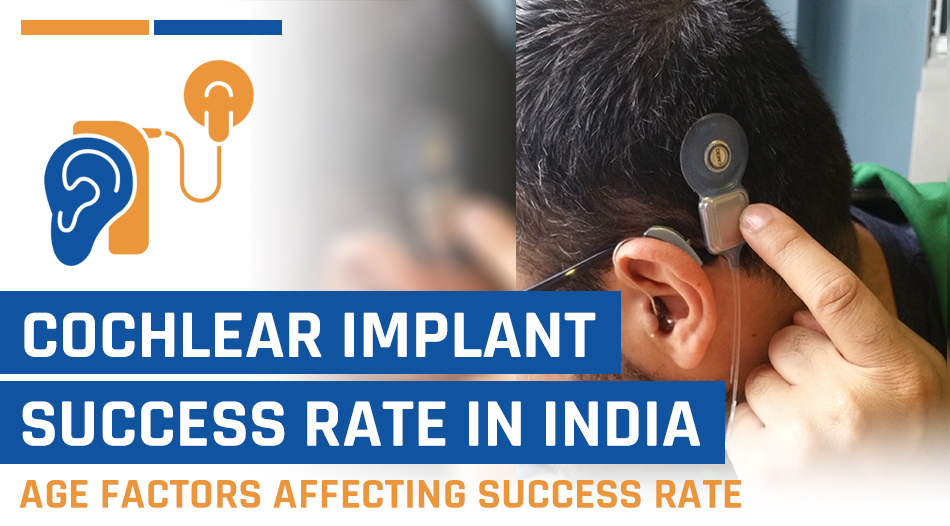
Cochlear Implant Success Rate in India
According to the World Health Organization, 95.1 million children aged 5-19 years in the world are living with hearing loss. WHO also mentions that around 2.5 billion people in the world are expected to have some kind of hearing loss by 2050.
This is alarming. In the Middle East, the burden of hearing loss is even more common. As per clinical research, over 78.1 million people experience some degree of hearing loss, with roughly 22 million suffering from disabling hearing loss in the Middle East.
India has emerged as one of the leading medical tourism destinations for cochlear implants. India performs 4,200 to 8,500 cochlear implant procedures annually as per available market research. It is important for patients to know the effectiveness and suitability of cochlear implants before they make medical decisions.
This blog aims to decode cochlear implant in India success rates and long-term outcomes for speech perception and recognition, hearing thresholds, and language development for adults and children. You will also get to know how successful cochlear implants are in India and how cochlear implant success rate varies by age, patient condition, and performance scale.


What the Research Shows
Long-term data shows favorable outcomes for cochlear implants performed in India.
■ The Adult Success & Quality of Life Study
A study was performed involving 50 patients, tracking patients who underwent surgeries between 2012 and 2024. In the study, there were 31 male and 19 female patients, and the mean age of deafness onset was 33.8 years. The study was published by the Indian Journal of Otolaryngology and Head & Neck Surgery.
■ Results
Cochlear implants were found to be effective in improving the quality of life in adults.
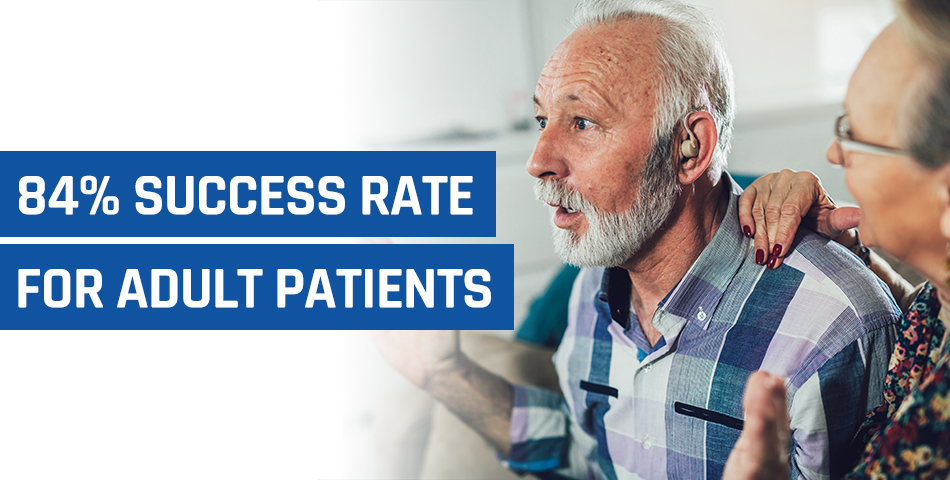
- In this study, 84% of adult patients achieved high satisfaction scores and were able to communicate properly.
- The VERIA surgical technique was used in 86% of the operations. The immediate complications after the operation were 0%.
Note: The VERIA surgical technique is a minimally invasive approach common in India.
■ The Pediatric Age-Based Success Study
A study published in the Indian Journal of Otolaryngology and Head & Neck Surgery shows promising results for children who underwent cochlear implant in India under the age of 5 years. Age is an important parameter for cochlear implant success rate.
■ Results
The results are based on auditory performance in children after operation (1 year).
- Children who underwent implantation before 5 years of age or before experienced a 12.29% higher jump in CAP (Categories of Auditory Performance) scores.
- Also, children experienced a 14.05% higher jump in MAIS (Meaningful Auditory Integration Scale) scores compared to older children.
Note: Categories of Auditory Performance (CAP) measures a patient’s hearing ability on the scale from 0 to 7. The Meaningful Auditory Integration Scale (MAIS) evaluates how well a patient uses hearing in daily life. Unlike CAP, it is usually based on parent or caregiver interviews (especially for children). The MAIS contains 10 questions, each scored from 0 to 4, giving a maximum score of 40.
What These Results Mean for Patients
The favorable outcomes clearly position India as one of the leading medical tourism destinations for international patients who are looking for cochlear implants. Additionally, for adult patients, it indicates that Indian centers achieve an 84% communication success rate using ultra-safe, minimally invasive surgical techniques as per one study.
For pediatric patients looking to undergo cochlear implant in India, age is an important consideration. However, cochlear implants performed under age 5 give the highest success. Indian surgical interventions still achieve over an 80% outcome score even in children diagnosed after 5 years.
Now, as you have a fair idea of cochlear implant success statistics. You should also know the cochlear implant pros and cons before getting the procedure.
Does age affect cochlear implant success rate in India?
Yes, various studies say that age is a critical factor for the success of cochlear implants in India. That said, the lower the age is, the higher the chance of its effectiveness to improve the quality of life.
A study mentioned that children who underwent implantation under 24 months of age achieved and performed better on the CAP scale. In contrast, children implanted between 49 and 72 months showed a significantly lower rate of speech development.
A common doubt is there among patients regarding how cochlear implant is different from hearing aids. Instead of getting confused, read Cochlear Implant vs Hearing Aid - How to Make the Best Choice?
Factors Affecting cochlear implant success rate in India
While there are many factors affecting cochlear implant success rate in India, the 3 major factors are explained below.
- Cochlear Anatomy: If a child has malformation in the inner ear, the performance score may be average. However, children with normal ears have a higher chance of benefiting well after cochlear implants.
- Hearing aid use before transplant: Studies show that children who used hearing aids before surgery achieved better outcomes after the implant is turned on.
- Language History: A study shows that adults who are born deaf require more time for normal hearing after device mapping, while patients who once had normal hearing and were able to speak properly before going deaf achieve success rates much faster.
Why Choose a Cochlear Implant in India?
As per studies, India is a premium destination for international patients looking for cochlear implants.
- Safety and Low Complication Rates: Indian surgeons performing cochlear implants, in most of the cases, try to make sure that the immediate major surgical complication rate is 0%.
- High Pediatric Development Outcomes: For children, India offers effective results in language development and successful transitions into normal, mainstream schools alongside their hearing peers.
- Highly Cost-Effective Infrastructure: The volume of cochlear implants performed in India is very high compared to Western nations. Also, the low administrative and operational cochlear implant cost is optimized according to high volume. This helps patients to get the global standard treatment at affordable costs.
- Surgeon Expertise: Specialist surgeon such as Dr. (Prof.) J. M. Hans has performed more than 3500 cochlear implants. International patients immensely benefit from his experience in minimizing complications and improving long-term support.
Leading cochlear implant surgeons like Dr. (Prof.) J. M. Hans and Dr. Amit Kishore prioritize patient safety, personalized care, and long-term clinical guidance to patients so that they can live a high quality of life without worrying about challenging follow-ups that international patients face after undergoing cochlear implants in Western countries.
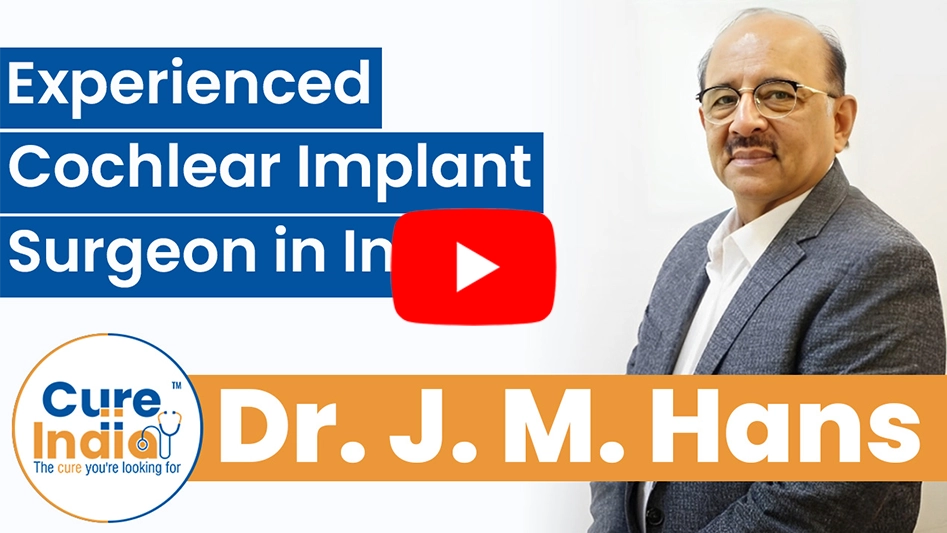
You should also know about Dr. Hans's Cochlear Implant Center to gain important insights to know his expertise. Another name who is renowned for cochlear implant in India is Dr. Kunal Nigam - ENT and Cochlear Specialist in India.
Cochlear Implant FAQs
Can a fully deaf person hear with a cochlear implant?
What percentage of people are happy with cochlear implants?
How long can you live with a cochlear implant?
How painful is a cochlear implant?
How long after a cochlear implant can I drive?
References
■ Aqib M, Sinha M, Manogaran RS, et al. Impact of Cochlear Implant on the Quality of Life in Post Lingual Deafened Adult Population in Tertiary Care Centre. Indian J Otolaryngol Head Neck Surg. 2025;77(1):75-81. doi:10.1007/s12070-024-05110-y
■ Gaurav V, Sharma S, Singh S. Effects of Age at Cochlear Implantation on Auditory Outcomes in Cochlear Implant Recipient Children. Indian J Otolaryngol Head Neck Surg. 2020;72(1):79-85. doi:10.1007/s12070-019-01753-4
■ Baser B, Patidar M, Surana P. A Study to Determine Various Factors Influencing Auditory Outcomes in Paediatric Cochlear Implantation. Indian J Otolaryngol Head Neck Surg. 2020;72(4):453-456. doi:10.1007/s12070-020-01900-2
■ Raghunandhan S, Kameswaran M, Anand Kumar RS, Agarwal AK, Hossain MD. A Study of Complications and Morbidity Profile in Cochlear Implantation: The MERF Experience. Indian J Otolaryngol Head Neck Surg. 2014;66(Suppl 1):161-168. doi:10.1007/s12070-011-0387-3
■ Singh S, Vashist S, Ariyaratne TV. One-year experience with the Cochlear™ Paediatric Implanted Recipient Observational Study (Cochlear P-IROS) in New Delhi, India. J Otol. 2015;10(2):57-65. doi:10.1016/j.joto.2015.09.002




Be First To Comment
Leave a Comment