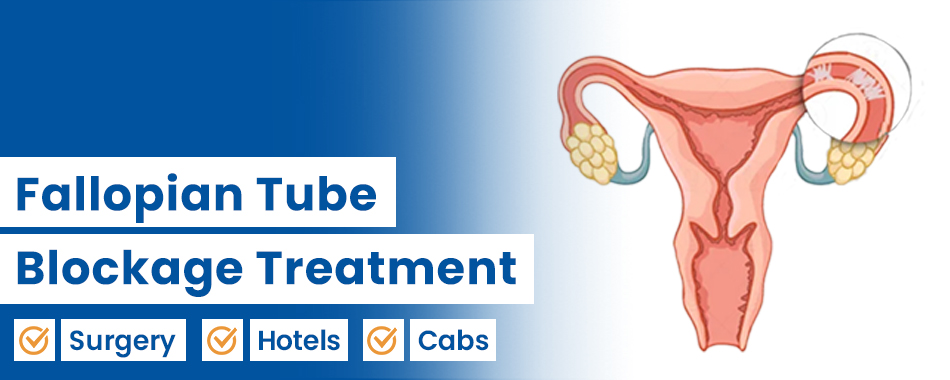
Fallopian Tube Blockage Treatment in India - Cost, Best Doctors & Hospital
Blocked fallopian tubes are a primary cause of infertility in women. The fallopian tubes are muscular structures lined with tiny, hair-like projections called cilia. These cilia help guide the egg from the ovary into the uterus and assist sperm in reaching the egg for fertilisation. Each tube ends in finger-like structures called fimbriae, which capture the egg after it is released from the ovary. Fertilisation occurs within these tubes.
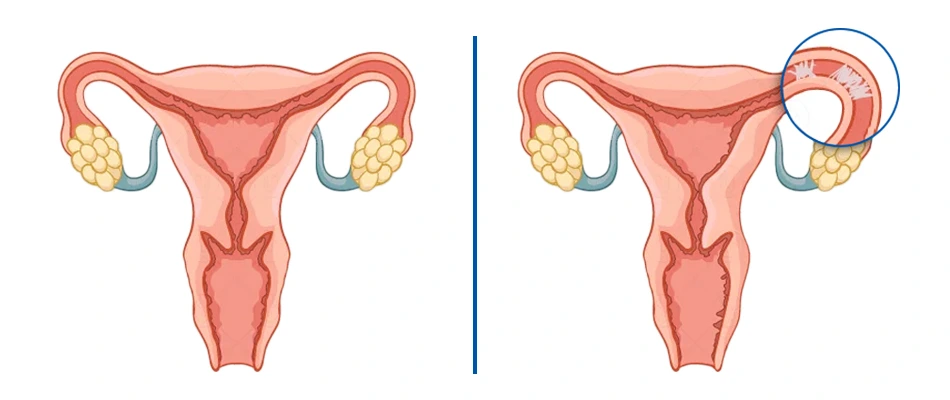
Damage to the fallopian tubes, whether from infections, surgeries, or other causes, can lead to blockages due to scar tissue formation. When one or both tubes are blocked, the egg cannot reach the uterus, and the sperm cannot reach the egg, preventing fertilisation and making pregnancy difficult. While certain natural methods support reproductive health, they cannot unblock fallopian tubes. That’s why most doctors rely on medical procedures as the most effective fallopian tube blockage treatment.
Treatment options for laparoscopy for blocked fallopian tubes, hysteroscopic surgery, and IVF. These procedures offer a higher chance of successful pregnancy through effective recanalisation. India has become a leading destination for blocked fallopian tubes treatment due to its combination of advanced medical facilities, experienced specialists, and affordable costs. IVF in India ranges from $1,020 to $3,000 per cycle, while in Europe it can exceed $5,000 per cycle. India has become a preferred destination among international patients due to its advanced techniques, modern hospitals, and significantly lower costs of treatment, which don’t compromise on quality.
What are the Blocked Fallopian Tubes Symptoms?
Blocked fallopian tubes do not often show any obvious symptoms, which is why many women are unaware of the condition until they face issues while getting pregnant. Unlike anovulation, where irregular menstrual cycles may signal an underlying issue, blocked fallopian tubes symptoms can remain silent for a long time.
The most common and early sign of blocked fallopian tubes is infertility. If you have been trying to conceive for 6 months to one year without success, especially if you are 35 years or older, your doctor may recommend specific fertility tests. One commonly used test is a special X-ray procedure to closely examine the fallopian tubes and check for any signs of blockage. Along with tube testing, fertility evaluations can also be done. While not all women experience similar symptoms, the possible symptoms of hydrosalpinx may include:

- Lower abdominal or pelvic pain
- Unusual or watery vaginal discharge
- A feeling of heaviness in the lower abdomen
Other underlying conditions linked to blocked fallopian tubes, such as endometriosis and pelvic inflammatory disease, can also cause additional blocked fallopian tubes symptoms. These include:
- Painful menstrual periods
- Pelvic pain
- Pain during sexual intercourse
That said, these symptoms alone do not always clearly indicate fallopian tube blockage, which is why medical evaluation and proper testing are necessary for accurate diagnosis and effective blocked fallopian tubes treatment.
What are the Causes of Blocked Fallopian Tubes?
One of the most common causes of blocked fallopian tubes is pelvic inflammatory disease. This condition usually occurs when sexually transmitted bacteria travel from the vagina into the uterus and further spread to the fallopian tubes or ovaries. The infection can lead to inflammation, scarring, and eventual blockage of the tubes.
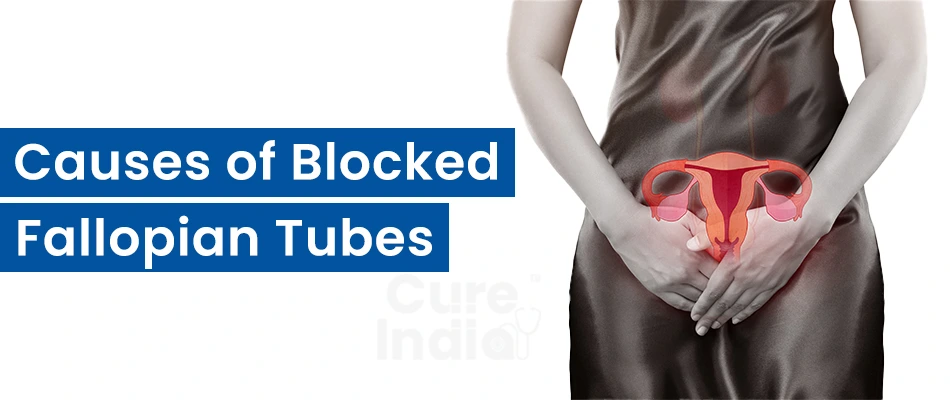
Even if pelvic inflammatory disease is not currently active, a history of repeated pelvic infections can increase the risk of tubal blockage over time, as scar tissue may continue to build up inside the fallopian tubes. Some of the other causes of bilateral fallopian tubal blockage include:
■ Endometriosis:
Endometriosis is a condition wherein the tissue that is present in proper alignment with the uterus starts growing outside the uterus. These tissues are found on the ovaries, fallopian tubes or the intestines. This condition would result in irregularities in the menstrual cycle and even tube blockage.
■ Chlamydia or Gonorrhoea:
If the patient has any impending history of the sexually transmitted disease or any other infection about the same, specifically on chlamydia (a contagious STD which can cause genital pain) or gonorrhoea (a bacteria STD infection which can lead to infertility). Both these conditions can prove to be extremely hazardous and result in tube blockage.
■ Uterine Infection:
If the patient has any previous history of uterine infection which can be caused due to the mix of normal vaginal bacteria, due to an abortion or even miscarriage can also prove to be a propagator of the disease by a vast amount. It is therefore important to consult your doctor beforehand in these cases.
■ Appendix Rupture:
Appendicitis is a condition wherein the appendix can become inflamed or filled with pus resulting in unbearable pain. This infection can even spread across your abdomen, and there is a need to have immediate surgery in these cases and clean out your abdominal cavity.
■ Ectopic Pregnancy:
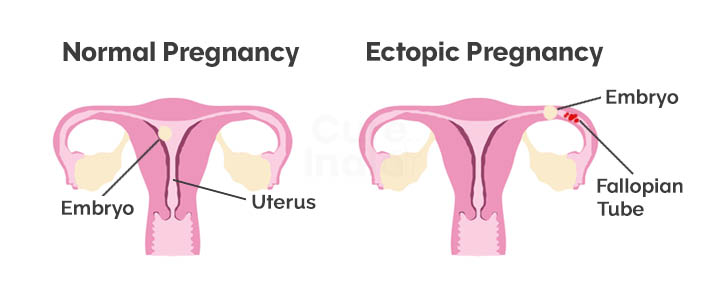
This is a condition wherein the fertilized eggs would be implanted outside the womb. The problem is that the eggs won’t be able to sustain without the womb, and if it’s left like that then it will cause serious damage to your internal organs resulting in grave complications. It can even cause vaginal bleeding and serious pelvic pain as well.
The fallopian tube blockage is a serious condition among females, and it should be treated with care during its earlier stages. By understanding the severity of the condition and the treatment options available for your condition, you will be able to make informed decisions and manage the condition more effectively.
What are the Options for Blocked Fallopian Tubes Treatment in India?
If one fallopian tube is open and your overall health is good, pregnancy may still be possible. In such cases, doctors may recommend fertility medications to increase the chances of ovulation and conception through the healthy tube. However, if both fallopian tubes are blocked, medical intervention becomes necessary, as the chances of you conceiving naturally becomes scarce. Mentioned below are some of the common fallopian tube blockage treatments performed in India:
■ IVF for Blocked Fallopian Tubes:
IVF or in-vitro fertilisation is an effective fallopian tube blockage treatment that bypasses blocked tubes entirely and allows fertilisation for patients unable to conceive naturally. During the procedure, your doctor will give you some fertility drugs to stimulate the ovaries, while eggs are collected using a needle under ultrasound guidance. The eggs are fertilised with sperm in a lab, and then some selected and healthy embryos are transferred to the uterus.
IVF would completely circumvent these fallopian tubes so that these blockages would not matter much. Official research has identified that an inflamed tube would remarkably mitigate the odds of the success of IVF treatment. Women with hydrosalpinx may need surgery to remove affected tubes first, as inflamed tubes can reduce the chances of IVF success. Only after your recovery from the surgery will you be given a date for your IVF procedure.
■ Hysteroscopic Surgery for blocked fallopian tubes:
Hysteroscopic surgery is a minimally invasive procedure used in fallopian tube blockage treatment to remove blockages or correct abnormalities inside the uterus that may affect the tubes. It is highly effective for certain types of fallopian tube blockage and is performed using a thin, flexible scope inserted through the vagina. Unlike Laparoscopy for blocked fallopian tube, hysteroscopy is a procedure that focuses on the uterine cavity but can significantly enhance your fertility outcomes when combined with other treatment procedures.
■ Laparoscopic Surgery for blocked fallopian tubes:
Laparoscopic for blocked fallopian tube can open blocked fallopian tubes or remove scar tissue that may be causing issues. However, this treatment does not work for everyone. Its success depends on your age, the location of the blockage, and the underlying cause. If there are only a few adhesions between your ovaries and tubes, your chances of pregnancy are usually higher. However, having blocked tubes also increases the risk of ectopic pregnancy, so your doctor will need to monitor you closely.
■ Tubal Ligation Reversal for blocked fallopian tubes:
Tubal ligation reversal is a surgical procedure to restore fertility after a permanent birth control procedure. It involves reconnecting the previously cut, clamped, or blocked fallopian tubes. In India, the success rate of pregnancy after this surgery ranges from 40% to 60%, depending on your age and tube connection. While this procedure is more affordable than IVF itself, it may not be suitable in cases with severe scarring, endometriosis, or male infertility, where IVF will often be the more suitable course of treatment.
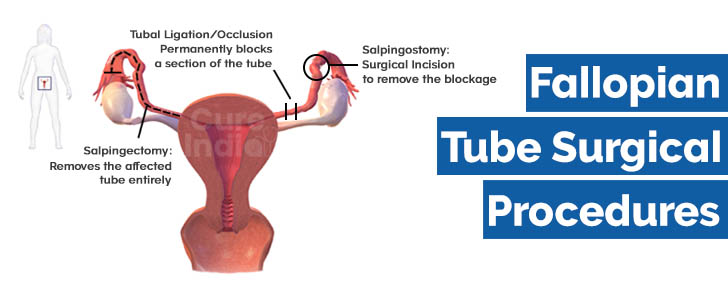
But essentially speaking, surgical removal of the tube might not always be a good alternative to choose from. Some situations would be better inclined towards IVF technique. Cases like large amounts of scarring, moderate to adverse effects of endometriosis and adverse effects of male infertility all point towards selecting the IVF option. You can consult your doctor with choosing the correct option as per your existing medical condition and what would be conducive for you.
There are options available as of today concerning fallopian tube blockage treatment without surgery. We would be looking at length at some of these measures in the following section.
Best Doctors for Blocked Fallopian Tube Treatment in India
If you’re searching for the best doctors for blocked fallopian tube treatment in India, you’ve come to the right place. India is home to expert fertility specialists who use advanced techniques to help women overcome this common cause of infertility. With their expertise, patients can look forward to effective treatment with renewed hope. CureIndia is here to guide you every step of the way, connecting you with top-rated doctors across all fields. Here is our list of the top doctors for blocked fallopian tube treatment in India:
1. Dr. Shivani Sachdev Gour
Dr. Shivani Sachdev Gour is an expert gynecologist and fertility specialist in India who is known for her expertise in diagnosing and treating blocked fallopian tubes. With extensive experience spanning over 26 years in reproductive medicine, she specialises in hysteroscopic and laparoscopic evaluations, tubal patency assessments, and advanced fertility treatments, such as IUI and IVF.
.webp)
2. Dr. Ruchi Tandon
Dr. Ruchi Tandon is a gynecologist and minimally invasive surgery specialist in India who is well-known for managing conditions like tubal blockage, endometriosis, and pelvic adhesions. With around 20 years of expertise, her areas of specialisation include laparoscopic tubal evaluation, adhesiolysis, and fertility-assistance procedures.

3. Dr. Sonia Malik
Dr. Sonia Malik is a senior fertility expert in India with around 40 years of experience in reproductive health and treatment of tubal-factor infertility. Her areas of specialisation include tubal patency tests, hydrosalpinx management, advanced ART procedures, and customised infertility treatment plans. He is a trusted name for couples needing blocked fallopian tube treatment in India.

4. Dr. Garima Goel
Dr. Garima Goel is a leading gynecologist and reproductive specialist in India who is recognised for her proficiency in treating blocked fallopian tubes through both medical and minimally invasive surgical methods. With experience spanning around 23 years in managing tubal damage, pelvic infections, and adhesion-related infertility, she offers targeted evaluations and treatment plans that are personalised to each patient’s unique condition.

What is the Step-by-Step Procedure for Blocked Fallopian Tube Surgery in India?
To restore your fertility, your medical team will evaluate the history of your medical conditions, along with your current health status. Once they reach a decision regarding a particular approach suitable for your condition, you will receive the date along with some pre-surgical instructions and guidelines.
After arriving at the hospital, you will be given the necessary guidelines, details of the procedure and what to expect by the doctor. Here's how blocked fallopian tube treatment is generally performed by Indian hospitals:
- Step 1: Consultation and Diagnosis: Your doctor will assess your fallopian tube blockage symptoms and perform tests such as hysterosalpingography (HSG) or ultrasound to locate the blockage.
- Step 2: Pre-Surgery Preparation: You may have to undergo routine blood tests, fasting, and pre-anaesthesia evaluation. Your doctor will explain the procedure, risks, and recovery involved before the treatment.
- Step 3: Anesthesia: You will receive general or local anesthesia to sedate you unconscious for your comfort during the surgery.
- Step 4: Surgical Procedure:
- Laparoscopy: During this procedure, small incisions are made, and a laparoscope is inserted to view the pelvic area. Your doctor will remove any blockages, adhesions, or scar tissue to restore your fertility.
- Hysteroscopic Surgery: This procedure involves inserting a thin scope through the vagina to correct uterine or tubal abnormalities.
- Tubal Reversal (if applicable): This procedure is used to surgically reconnect previously blocked or tied tubes.
- Step 5: Monitoring: The doctor ensures the tubes are open and checks for any signs of bleeding or complications. They check your response after the treatment before transferring you to standard beds.
- Step 6: Recovery: Most patients can go home the same day or after 24 hours following the surgery. Pain medications and antibiotics may be prescribed to manage initial pain or discomfort.
- Step 7: Follow-Up: Your doctor will schedule follow-up consultations to monitor your healing and discuss fertility planning. You must attend these sessions to accelerate your recovery process.
What is the Cost of Fallopian Tube Blockage Treatment in India?
The total cost of fallopian tube blockage treatment in India can depend on a lot of factors, like the location of the hospital, the procedure performed, the severity of the blockage and the surgeon’s fees. However, unlike European countries like the UK, the USA, Singapore and Australia, which charge as high as $20,000 per treatment, the Indian cost of treatment is lower.
Given below is a breakdown of the cost of blocked fallopian tubes treatment in India:
| Treatment Name |
Cost in India |
Stay in India |
| Fallopian Tube Blockage Treatment in India |
$2,000 |
7 Days |
Non-surgical options like tubal ligation are more affordable, while surgeries and IVF can be more expensive. After diagnosis of your condition and further medical evaluation, your doctor will recommend the best possible approach based on your needs.
How is Recovery after Blocked Fallopian Tubes Treatment in India?
After your fallopian tube blockage treatment, it’s normal to experience some mild discomfort, bloating, or cramping for a few days. Most patients who undergo laparoscopy for a blocked fallopian tube or hysteroscopic surgery can go home the same day or after 24 hours. You should rest at home for 2 to 3 days and gradually resume light activities. Avoid strenuous exercise, heavy lifting, and sexual intercourse for at least 1 to 2 weeks, as your body needs time to heal. Your doctor may prescribe pain relief and antibiotics to prevent infection and reduce inflammation during these stages.
For tubal reversal or more complex surgeries, recovery may take longer, typically 3 to 4 weeks before resuming normal activities. Follow-up visits are essential to ensure your tubes are functioning correctly and to discuss fertility planning.
During recovery, focus on healthy nutrition, hydration, and adequate rest. Avoid alcohol and smoking, as they can hinder your healing journey. Listen to your body and contact your doctor if you notice severe and persistent pain, fever, unusual discharge, or heavy bleeding. After care is as essential as the treatment itself; hence, try to follow the instructions of your doctor and attend the follow-up sessions, as it can improve your chances of successful conception significantly.
Why Opt For Fallopian Tube Blockage Treatment in India?
India is rapidly becoming a top choice for international patients seeking fertility and blocked fallopian tube treatments. India’s world-class clinics, experienced specialists, modern labs, and much lower prices draw patients from Europe, the Middle East, Africa, and Southeast Asia. In India, waiting times are typically far shorter than public systems in many European countries like the USA, UK and Australia.
Unlike some public health systems in Europe, where patients may wait months for fertility referrals or funded IVF, private clinics in India usually offer rapid scheduling and shorter pre-treatment wait times, which is essential for patients seeking emergency treatment.
Listed below are some more advantages that you can avail by visiting India for fallopian tube blockage treatment:
- Advanced treatment technologies
- Highly experienced oncologist
- Lower treatment costs
- Comprehensive cancer care
- Shorter waiting times
- Patient-centric approach
- All-inclusive treatment packages for international patients
LET'S PLAN YOUR
TREATMENT IN INDIA
Fallopian Tube Blockage Treatment in India FAQs
If you are wondering how soon you can return to normal activities after a laparoscopy for blocked fallopian tubes, the timeline depends on individual factors like your medical conditions, health and the extent of the blockage and procedure. The typical recovery period following laparoscopic surgery is between 2 and 4 weeks, although this can vary depending on your specific condition. It is recommended to consult with a medical professional before trying to conceive.
The cost for blocked fallopian tube surgery in India generally ranges from $1,200 to $4,000, depending on the type of blockage, the surgical method used, the hospital, and the doctor’s experience.
There is no drink or natural remedy that can directly unblock your fallopian tubes. Blockages usually happen due to infections, scarring, or inflammation, and these require medical treatment. However, some healthy drinks can help support your overall reproductive health and reduce inflammation in the body:
- Warm water: helps improve circulation and overall health
- Herbal teas (like ginger or turmeric tea) may help reduce inflammation
- Fresh fruit and vegetable juices: provide essential vitamins and antioxidants
- Green tea: supports general health and immunity
These drinks cannot remove blockages but can help ease the fallopian tube blockage symptoms.
After considering blocked fallopian tubes treatment, you may have some common questions, such as ‘What is fallopian tube blockage?’, ‘what are the types of treatment?’, and what is the success rate of each treatment. Before you go into the surgical procedure, your doctor will talk to you in detail regarding the procedure, outcomes and what to expect.
Whether you would be able to conceive after two months of the surgery depends on a variety of factors, including the extent of your surgery, areas where the tissue was removed, and more, which will affect your recovery and whether or not your body is prepared for pregnancy. That being said, most couples start trying to conceive within a few weeks after the fallopian tube blockage treatment.
After a laparoscopy for blocked fallopian tube, you will be kept in the recovery chamber, where your medical team will monitor your response and blood signals after the treatment. You will be recommended to avoid complete bed rest during the initial recovery period; however, don’t perform any strenuous duties. A full recovery after fallopian tube blockage treatment may take 2 to 3 weeks, at which point you can resume normal activities.
India is one of the safest and reliable destinations for blocked fallopian tubes treatment. India offers high-quality treatment performed by highly qualified medical professionals in state-of-the-art infrastructures. Most Indian hospitals performing this treatment follow international care standards and guidelines, resulting in 100% success rates for the treatment of blocked fallopian tubes.


 +918448560641